Skip to Content
Home | news | Press Releases

Press Releases

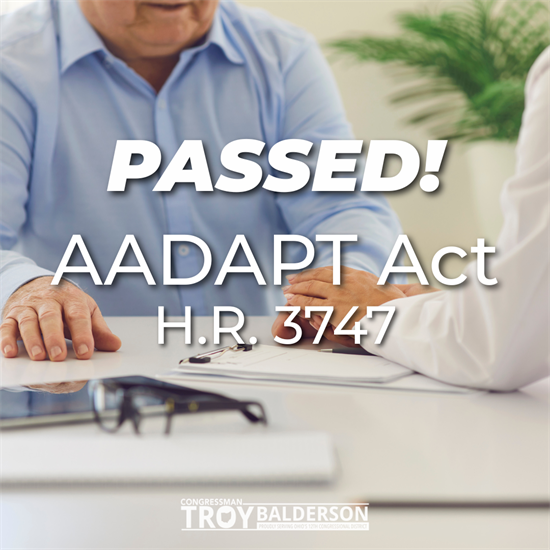
House Passes Balderson's AADAPT Act to Improve Early Alzheimer's Detection and Care

WASHINGTON, D.C. – Today, Congressman Troy Balderson (OH-12) applauded House passage of his Accelerating Access to Dementia and Alzheimer’s Provider Training Act (AADAPT Act), H.R. 3747.

The legislation, co-led by Congresswoman Nanette Barragán (CA-44), strengthens and reauthorizes the Project ECHO program to help primary care providers better identify, diagnose, and manage Alzheimer's disease and other dementias—particularly in rural and underserved communities.

“Alzheimer’s disease is one of the most significant public health challenges facing our country today,” said Balderson. “The sooner we can identify Alzheimer’s disease and other dementias, the sooner patients and families can begin treatment, plan for the future, and access the care and support they need. I’m grateful to my House colleagues for joining me in passing the AADAPT Act to help bring high-quality care to more Ohioans.”

“New treatments and new diagnostic tools are transforming what is possible for people living with Alzheimer’s,” said Robert Egge, Alzheimer’s Association chief public policy officer and AIM president. “The AADAPT Act ensures that primary care providers across the country — especially in rural and underserved communities — have the resources they need to bring that progress to their patients. We thank the bipartisan champions of this legislation for helping make that possible.”

More than 7 million Americans—including more than 236,000 Ohioans—are living with Alzheimer's disease, and those numbers are expected to continue rising in the coming years. Because primary care providers are often the first health care professionals patients see when memory loss or cognitive decline begins, expanding access to specialized training can help improve early diagnosis and patient outcomes.

The AADAPT Act reauthorizes and strengthens the Project ECHO program, which connects primary care providers with specialists through virtual training, mentorship, and case-based learning. The program helps equip providers with the knowledge and confidence to identify potential cognitive impairment earlier, improve care coordination, and expand access to quality dementia care in communities that may lack specialty providers.

Full text of the bill can be found HERE.


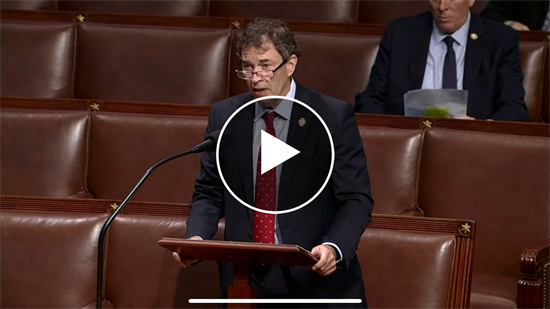
Congressman Balderson speaks on House floor in support of the AADAPT Act.

###

The latest